
No products in the cart.
Outdoor Adventure
Are Arc’teryx Jackets Worth It?

16
Feb
Feb
Published February 16, 2026 04:00AM
I recently bought a new Toyota Tundra. While filling out the paperwork, the salesperson asked me how long I thought I would keep the truck. My curt response: “The rest of my damn life.”
I was feeling guilty about spending $50,000, but I could live with the expense if I could get 20 to 30 years of use from it. Toyotas aren’t cheap, but their reliability is unmatched, which offsets the pricetag.
When I buy an Arc’teryx jacket, I feel like I’m getting a Toyota truck.
Like Toyota, Arc’teryx’s build quality is amazing, its features are incredibly well thought out, and its famed reliability is real. But when I’m purchasing one of their jackets for $300, $600, or even $900, I feel a similar low-grade financial stress. Should I be wearing something that costs this much? Is the gear investment worth what I get in return?
Are Arc’teryx Jackets Worth It?
The answer, for me, is always yes because Arc’teryx is in a category of its own when it comes to outerwear. For more than 25 years, the company has set the bar for how technical outerwear can and should be made. It started with their Alpha SV in 1998, a bombproof climbing jacket that redefined how durable, waterproof, and reliable a jacket could be. That Alpha SV, still in the line today, has gone through iteration after iteration, keeping pace with new tech and the ever-more-adventurous climbers who rely on it for protection in extreme environments.
Years ago, I had the chance to tour the Arc’teryx headquarters in North Vancouver, British Columbia, and saw firsthand how the brand’s success is created. Their designers are a bunch of obsessive geeks, in the best way possible, who take pride in producing designs no one else can touch. I got to meet the guy who spent years inventing the first waterproof zipper, the company giving him the freedom to perfect a feature that’s since revolutionized outerwear. They showed me their design center inside HQ, where prototypes of new products are made and immediately shipped to their athlete testers. This cuts out months of waiting for prototypes to arrive from Asia, helping to keep new designs on the cutting edge of innovation while still rigorously field-tested.
Nowadays, other jackets rival their quality, but I can still feel the difference when wearing a piece from this storied Canadian brand. The face fabrics and waterproof membranes are always high quality, the fit is perfect, and the designs are never overdone. Like a sloppy writer adding superfluous words, other jacket companies often add doo-dads to their jackets that look good in marketing materials but make no difference in the performance. Arc’teryx keeps things clean and sleek, only including features that matter.
When I reached out to the brand this year, Ashley Anson, VP of Product Design and Women’s Apparel, echoed this company ethos: “Our goal is to always have the most durable materials and constructions that stand the test of time. We don’t chase trends, we are simply committed to creating lasting gear, tested in the harshest conditions, when mountain athletes need it most.”
Here are my three favorite jackets from Arc’teryx’s current lineup.
The Best Arc’teryx Jackets
Arc’teryx Sabre SV
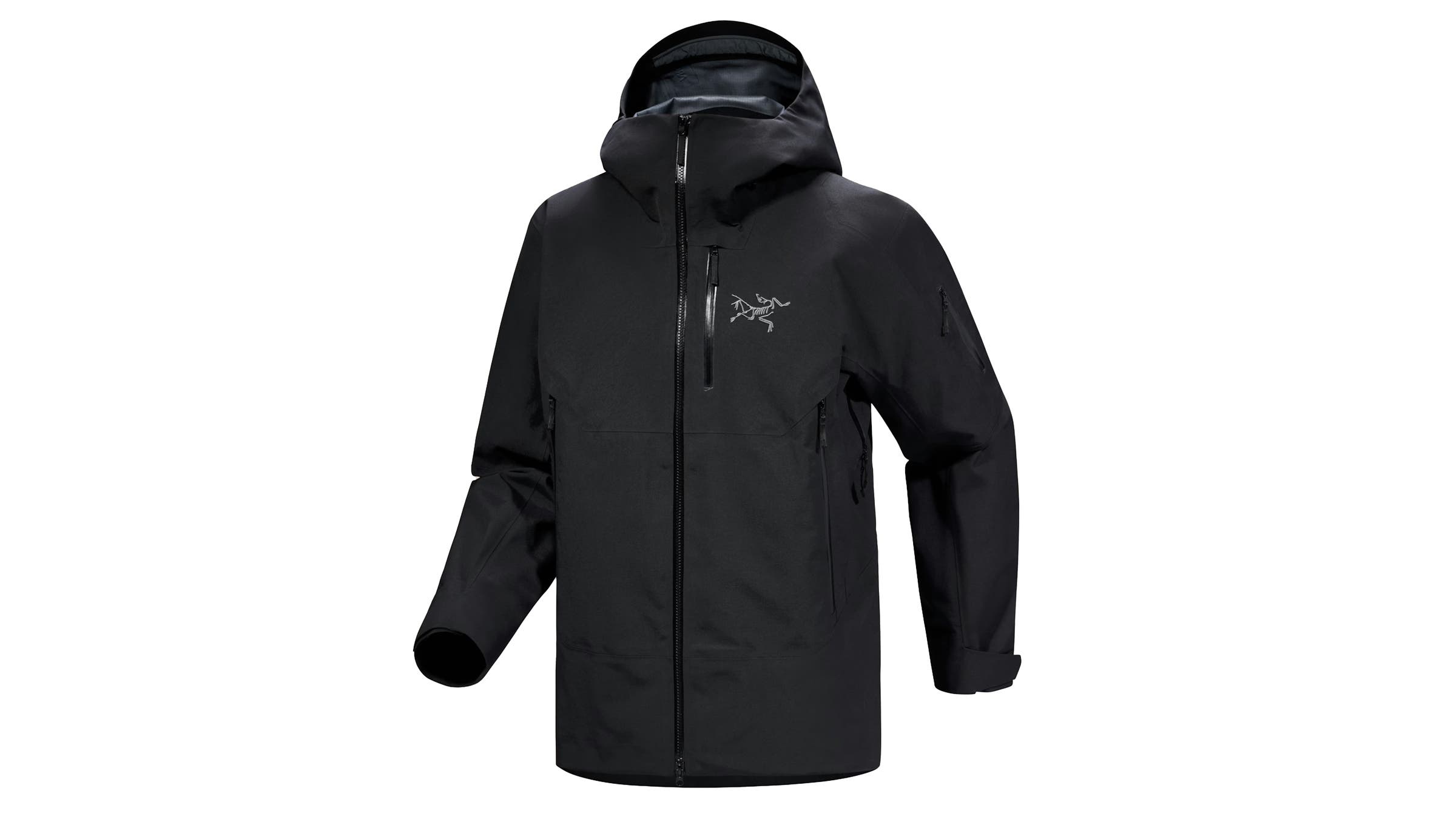
I can see you already rolling your eyes. For $900 you can fly to Europe, buy four pairs of cutting-edge running shoes, or pay half your mortgage. So why spend what feels like an absurd amount on a ski jacket?
For me, it comes down to value over time. For $900, you get a ski jacket so well-made that it will not only last for at least the next 15 years but also keep performing at the highest level throughout its lifespan. Divided by 15, $900 is just $60 per year, which seems like a small price to pay for a fully waterproof Gore-Tex Pro ePE jacket with a 200-denier face fabric that can put up with trees, ski edges, and nearly any other hazard you can think of—and come away without a scratch. The ePE moniker means the jacket is now free from intentionally added PFAS, but it still performs to the bar-setting waterproof standards demanded by Gore-Tex. The longevity potential of this jacket is also an environmental story. Most people I know cycle into a new jacket well before they get 10 years of use, so if you keep the Sabre SV for 15, that extends the timeline by 50 percent, cutting down on apparel waste.
I’ve been using the SV mostly as an inbounds ski jacket because it’s not the lightest shell on the market, but it still packs down to the size of a football, so it can easily live in the bottom of my backcountry bag and come out when I’m ready to head down. Style-wise, the SV is cut perfectly so that I get plenty of movement but never feel like I’m wearing a trash bag, and thanks to the longer cut, I look on-trend when waiting in the lift line with skiers who are half my age.
Arc’teryx Cerium SV
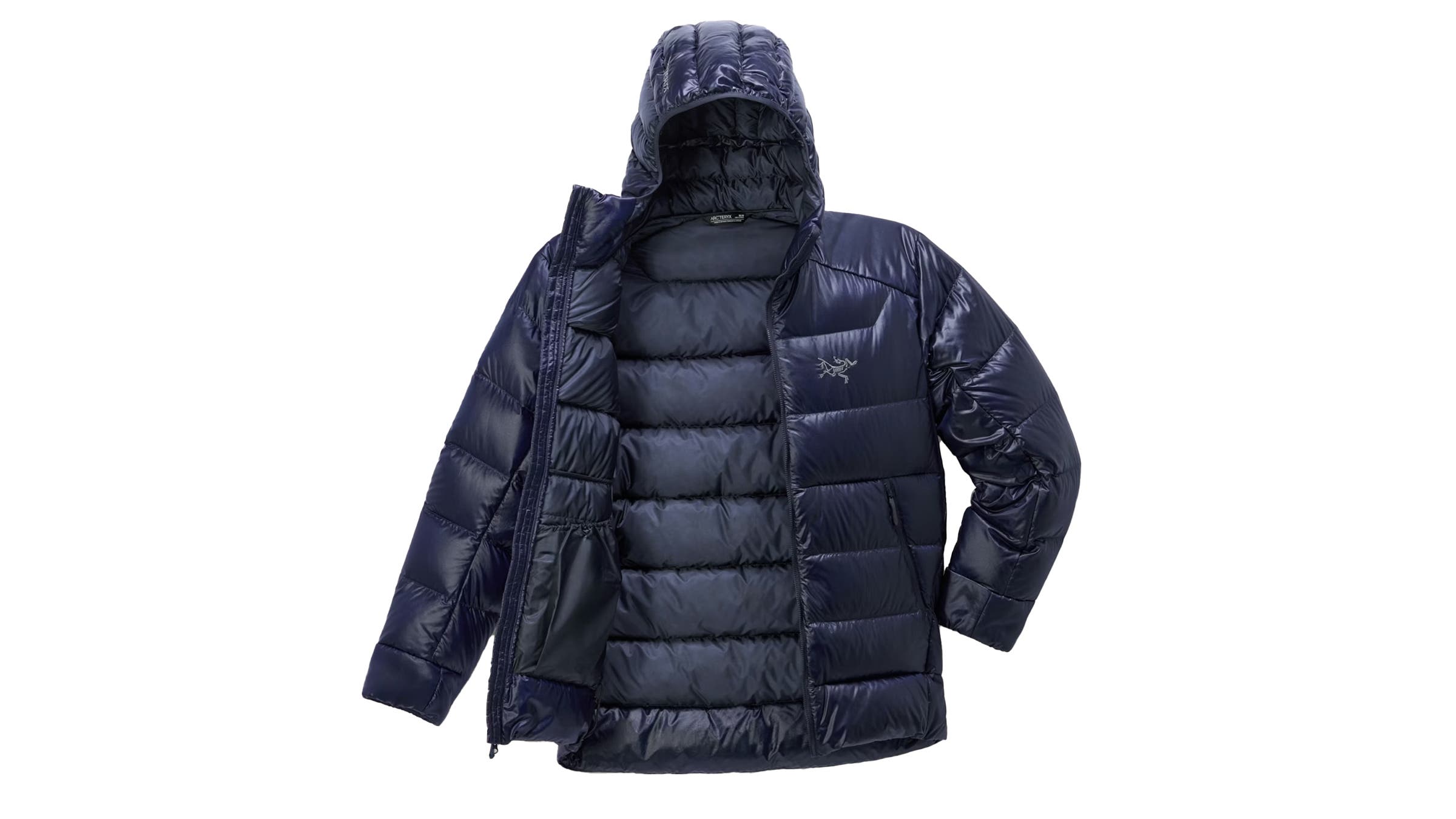
Anyone who’s spent a lot of time outside knows that when it’s truly cold—zero degrees and below—a regular, everyday down coat doesn’t provide enough warmth; The cold seeps through, leaving you chilled. For those days, when the snow is extra squeaky and my beard is permanently frozen, I have to have this jacket. Thanks to its generous 1000-fill goose down, I’ve comfortably worn the Cerium SV in temps as low as -15 degrees F and never felt it was out of its league. Arc’terx smartly covered all the down with a 20-denier Pertex face fabric with a reinforced construction, ensuring the jacket won’t easily tear and spill those precious feathers.
At just slightly over 15 ounces, the Cerium SV weighs about the same as a double-decker peanut butter sandwich, so it won’t slow you down on big days in the backcountry but will be there if you get in trouble, keeping you warm and safe after you’ve pushed the SOS button on your Garmin and are waiting for the helicopter to come pluck you out. A bonus: The Cirium SV comes in the richest and most beautiful purple I’ve ever seen on a jacket.
Arc’teryx Atom Hoody
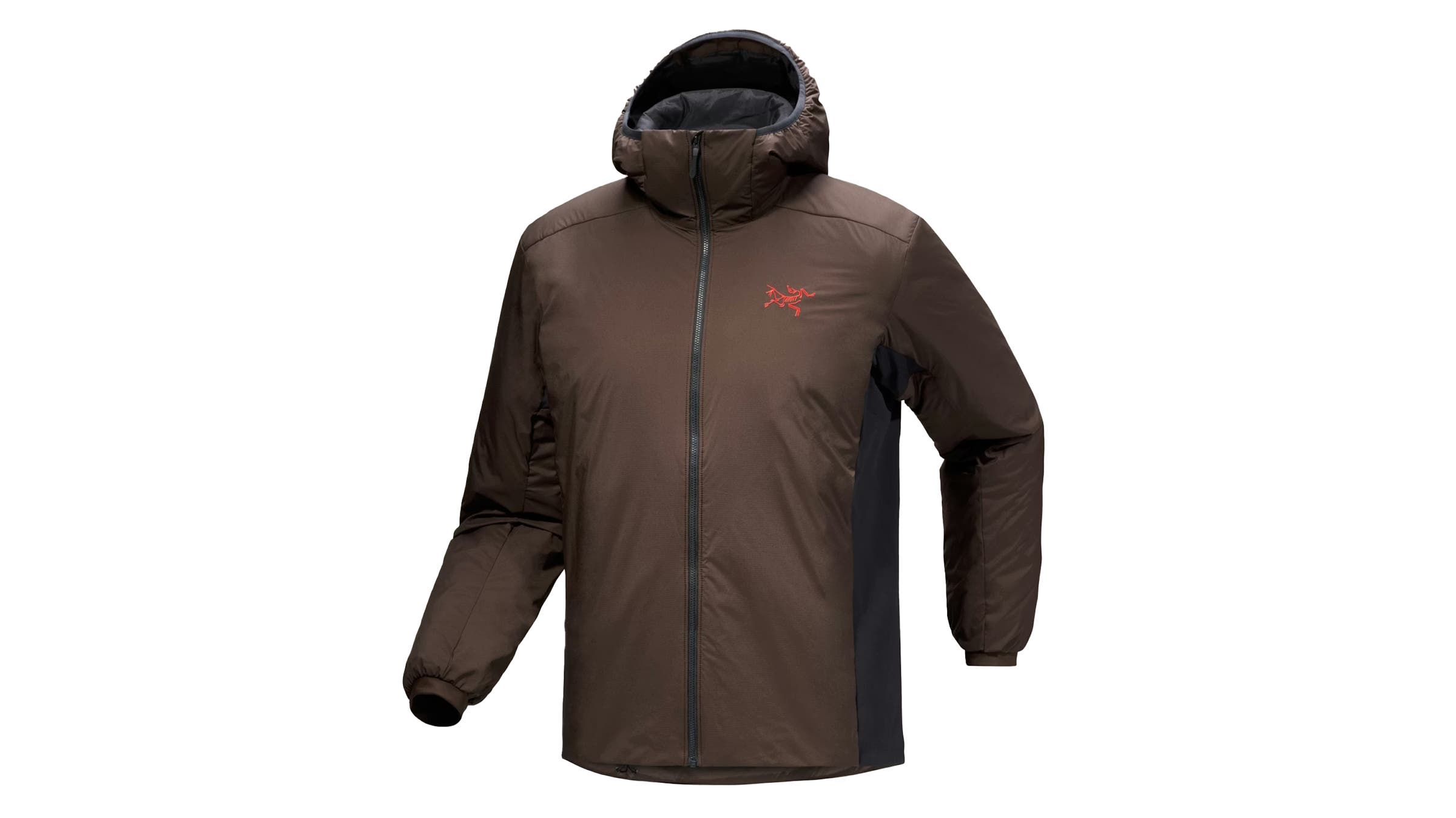
The Atom Hoody was originally launched in 2009, but, 17 years later, it still won our 2026 “Best Midlayer for Men” award. That means the jacket has stood the test of time and still performs better than the dozens of high-quality competitors that have since flooded the midlayer market. I agree that the Atom sets the bar, with the just-right mix of insulation and breathability that makes it both a go-to uphill ski layer and perfect under a shell when riding the lifts. My favorite aspect of the hoody is the strategic mix of materials—breathable fleece under my arms and panels made from synthetic insulation packed between two layers of air-permeable face fabric on my chest, back, and top of my arms. The result is a jacket that dumps heat extremely well while I’m going up the skin track while still providing plenty of warmth when it’s bitterly cold. Even if I manage to sweat through parts of the jacket, it dries by the time I’ve transitioned my skis for the down.
At $300, the Atom is more expensive than most midlayers from other top-tier brands, but testers, including myself, have found that Arc’teryx’s materials stand the test of time here as well. Many other midlayer face fabrics start to pile after a couple months of use, but the fabric that covers the Atom has stayed intact for years, even when repeatedly rubbing up against the inside of a shell or against a pack.
Source link
