
No products in the cart.
Fitness Tips
Countess Elizabeth Bathory in 'Lizzie Borden' Netflix Series: Was She Real?

19
Sep
Sep
In the new Netflix series about Lizzie Borden, the Borden family maid reads Lizzie a book about a very disturbing countess named Elizabeth or Elizabetta Bathory.
Be forewarned that some of the details about Bathory and the series are graphic and disturbing. The Netflix series Monster: The Lizzie Borden Story shows Bathory bathing in milk and then the blood of young women who are brought to her castle and murdered by her devoted servants.
However, was Countess Bathory real? The series says that she lived in Transylvania. She couldn’t possibly be real, right? It turns out she was; in fact, the real Countess Elizabeth Bathory was also called the “blood countess.” However, historians dispute whether she really killed 650 girls and women or whether she was targeted with falsehoods by the Hungarian king because she was a threat to his power.
The latest installment of Ryan Murphy’s Netflix series explored the nature of women who kill.
Countess Elizabeth Bathory Is Considered the Most Prolific Female Serial Killer in History, But Was She Really?
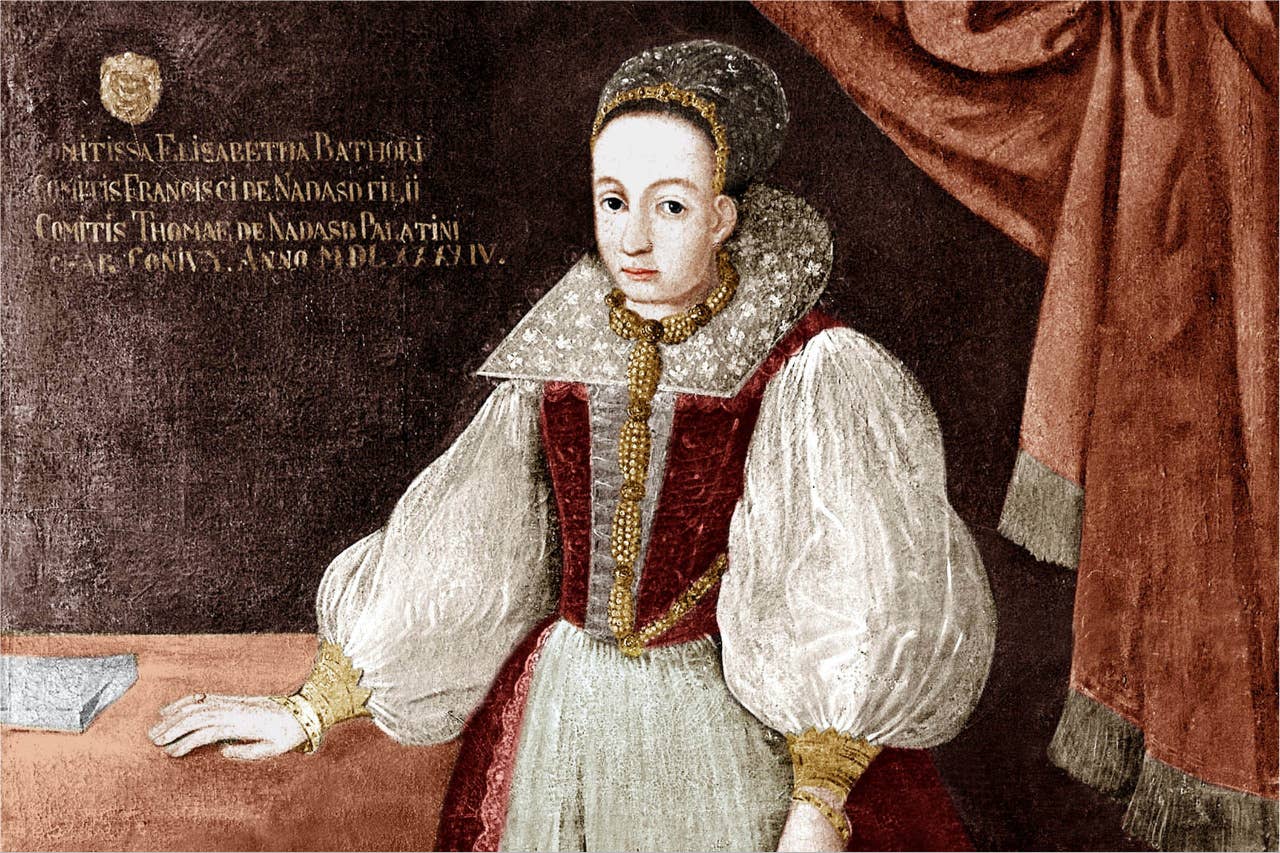
Apic/Bridgeman via Getty Images
According to History Today, Bathory is “the most vicious female serial killer in all recorded history.” However, it can be difficult to determine what information about her is fact and what is mythology. As with her counterpart, Dracula, she is considered a “legendary vampire.”
She’s accused of having murdered more than 650 young women and girls.
She was born in 1560 to a noble family that ruled Transylvania, which was part of Hungary at the time, History Today reported. Although she married and bore children of her own, word quickly spread that she was “sadistic” and liked to torture young girls, drinking their blood because she believed it would preserve her youth. Popular mythology holds that she liked to bathe in their blood as well, according to National Geographic.
“Every season of Monster has been an exercise in understanding the person’s psychology,” the actress Ella Beatty, who played Lizzie Borden, told Tudum. “Are they born or are they made? I knew from the beginning that Ryan Murphy and Ian Brennan were really interested in exploring what brings a woman to the point of violence.”
Was Countess Bathory Unfairly Targeted?
However, some researchers believe that Bathory was targeted with false stories. “Historical research questions many allegations against Báthory, indicating possible political motivations for her persecution,” wrote Aleksandra Bartosiewicz of Poland’s University of Łódź in a research paper. “The countess’s alleged blood baths for youth are largely considered myth without substantial evidence.”
Still, there were documented problems in her life. “Already at the age of four or five, she suffered from epileptic seizures, violent mood swings, as well as painful migraines,” Bartosiewicz wrote, adding that the countess married a man, Count Ferenc Nádasdy, who introduced her to torture at a young age. By one account, he “gifted the countess gloves spiked by claws, with which to thrash her servants,” National Geographic reported. He died 10 years before her.
Kimberly Craft wrote in Infamous Lady: The True Story of Countess Erzsébet Báthory that witnesses accused the countess of stabbing needles into victims’ lips, beating them to death and cutting off their hands.
In 1610, after her alleged killing spree spread to the upper class, the king of Hungary commissioned an investigation. She was not convicted despite testimony but remained imprisoned until she died in 1614, National Geographic reported. According to The Associated Press, four of her servants were convicted of murders and executed.
“Was Báthory a serial killer who was tormenting and torturing 650 young women for nothing more than her pleasure?” asked Annouchka Bayley, a British author and academic to the AP. “I’m very convinced that it is, as we put it in England, a stitch-up job.” Bayley believes she was a threat by teaching women to read and even had a printing press. She was turned into a monster because she was a threat.
“You have to remember, these are the years of the Reformation and the Counter-Reformation where people were being burned at the stake for their heretical beliefs. The printing presses, which had started flourishing across Europe, were giving people much wider access to information, and this was seen as very dangerous,” Bayley said to AP.
It’s possible to tour Báthor Castle, where the countess lived, about 170 miles from Budapest in a town called Nyírbátor. The castle contains wax figures of the countess and other relatives.
“Among those who love history, Nyírbátor has always been an attractive destination. Come to the city famous for one of the most influential Hungarian families of the Middle Ages, the Báthoriakok, and see the lunch palace, which was fully renovated in 2006,” the website says.
Related: Michael Desronvil: Holdout Juror in Lindsay Clancy Case Speaks Out
Source link
