
No products in the cart.
Outdoor Adventure
A Longer Winter for These States

02
Feb
Feb
Published February 2, 2026 09:17AM
Punxsutawney Phil saw his shadow this year—predicting six more weeks of winter. And that’s what meteorologists are expecting, too. According to AccuWeather senior meteorologist Chad Merrill, “The statistics and the upcoming weather pattern will work in tandem and favor six more weeks of winter” across most of the country. If you’re a warm-weather fan, our apologies.
Though some of the nation will benefit from spring’s early arrival, millions of others will be stuck in winter, mostly on the east coast.
Here’s Where Winter Will Linger in 2026
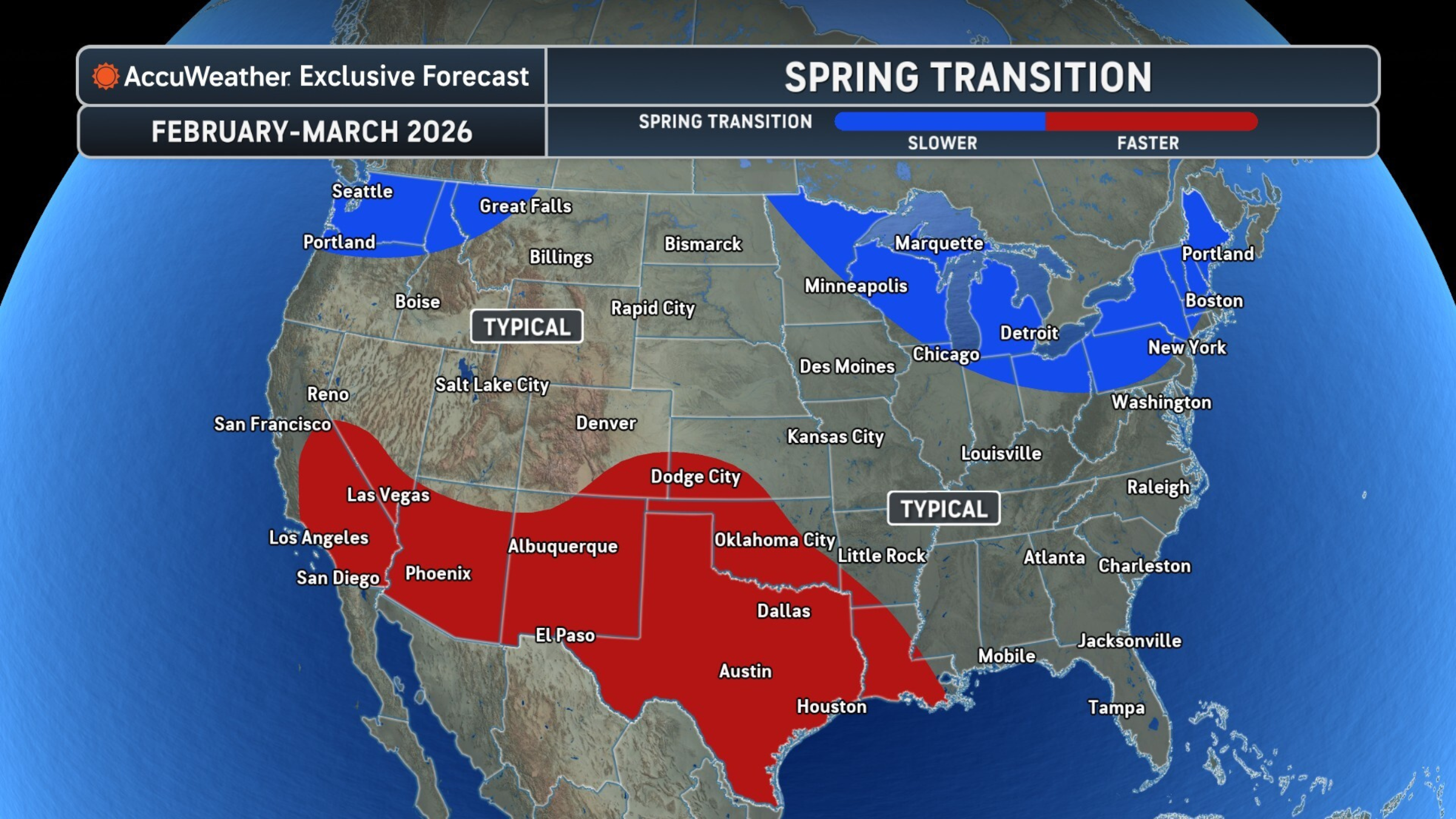
“The transition to warmer spring weather will be slower across the Northeast, Great Lakes and the Pacific Northwest this year,” says Paul Pastelok, lead long-range expert at AccuWeather.
The Northeast and Great Lakes
In the Northeast, parts of New York, Vermont, New Hampshire, Maine, Massachusetts, and Connecticut will remain cold through March, specifically experiencing late-season snow and frost.
In the Great Lakes, an extension of colder weather will present more opportunity for snowfall that could impact farmers in Illinois, Indiana, Ohio, and Pennsylvania.
The Western U.S.
The will be lingering snow and rain in the Northwest and northern Rockies, too. Though the Inland Northwest is used to early spring weather, this year, the transition to sustained spring warmth will take longer in states like Washington, Oregon, Idaho, and Montana.
The Upper Midwest
Late-season snow and frost will also arrive in the Upper Midwest this season. And there is a spring flooding risk as well in states like Minnesota, Wisconsin, and Michigan as the snowpack melts.
Spring Flood Risk
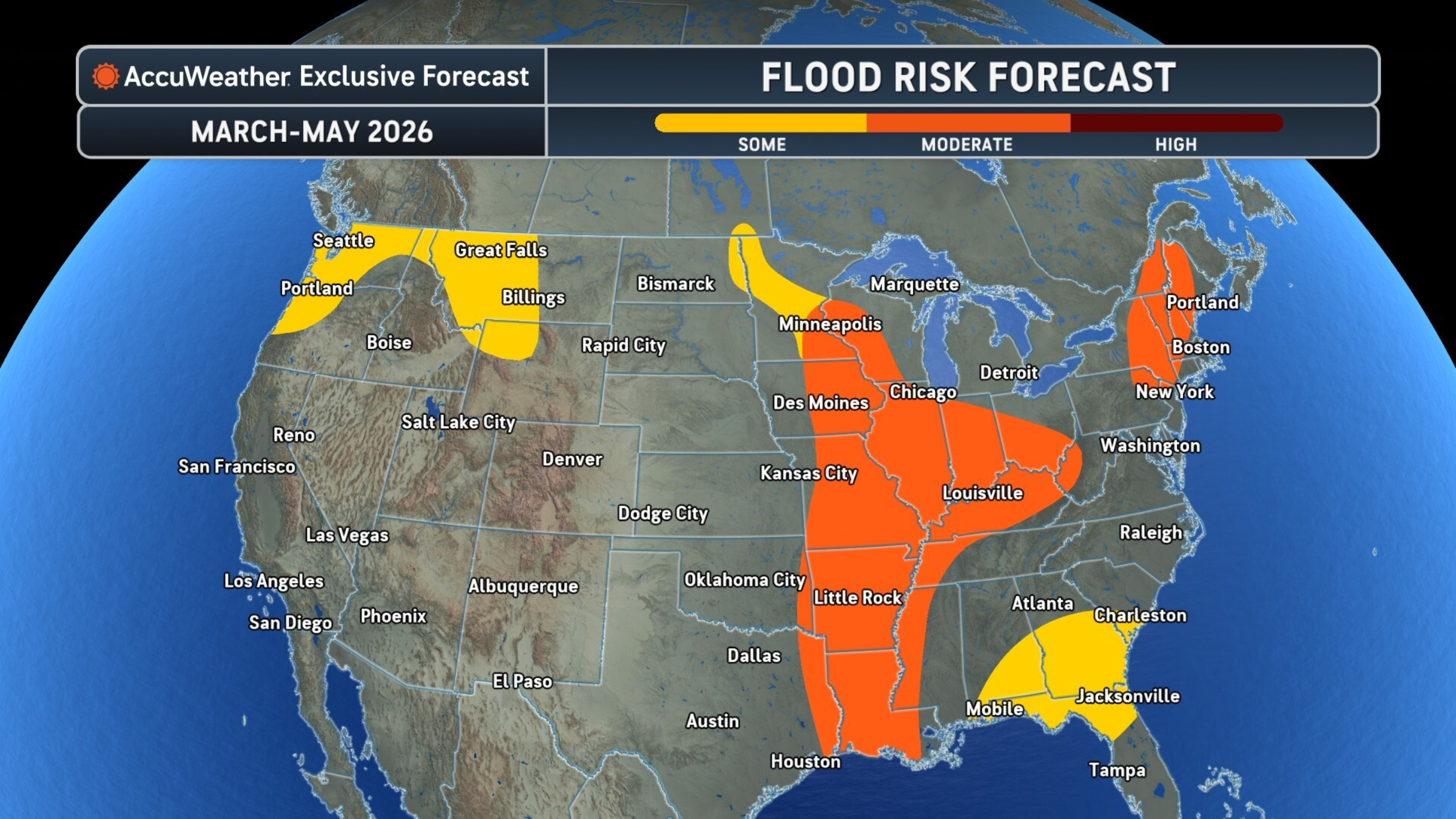
Flooding will be a serious weather risk through spring once the cold weather subsides.
Many have noticed the river levels running low across much of the midsection of the nation this year, but there are a few storms in the forecast towards the end of winter into early spring that could turn this around quickly.
“The combination of melting snow and heavier spring rainfall raises the risk for river and flash flooding across the Mississippi and Ohio valleys,” Pastelok says. “We have seen similar setups in past years, like 2013, 2014, and 2023, when spring flooding became a major issue.”
AccuWeather long-range experts say above-historical average precipitation is expected this spring across parts of Pennsylvania, Ohio, West Virginia, Indiana, Illinois, Iowa, Missouri, Kentucky, Tennessee, Arkansas, Kansas, and Oklahoma, as well as Minnesota and North Dakota.
And though fewer tornados are expected this spring compared to last year, the season will not be quiet, Pastelok says. But overall, severe thunderstorms are expected to cause more damage than before.
Where Will It Be Warm?
“Warmer springlike weather is expected to arrive early this year across much of the Southwest, from Southern California to Texas,” Pastelok says, specifically across parts of California, Nevada, Utah, Arizona, New Mexico, Colorado, Kansas, Oklahoma, and Texas.
Weather will be shaped by a rapidly fading La Niña, a slower jet stream, and a stronger southern storm track. Still people may need to “crank up the air conditioning earlier than normal this year” in those states.
The AccuWeather 2026 U.S. Severe Weather Forecast will be issued in mid-February.
Source link
