No products in the cart.
Outdoor Adventure
Are These the Best Budget Running Shoes?
26
Jan
Jan
Published January 26, 2026 04:00AM
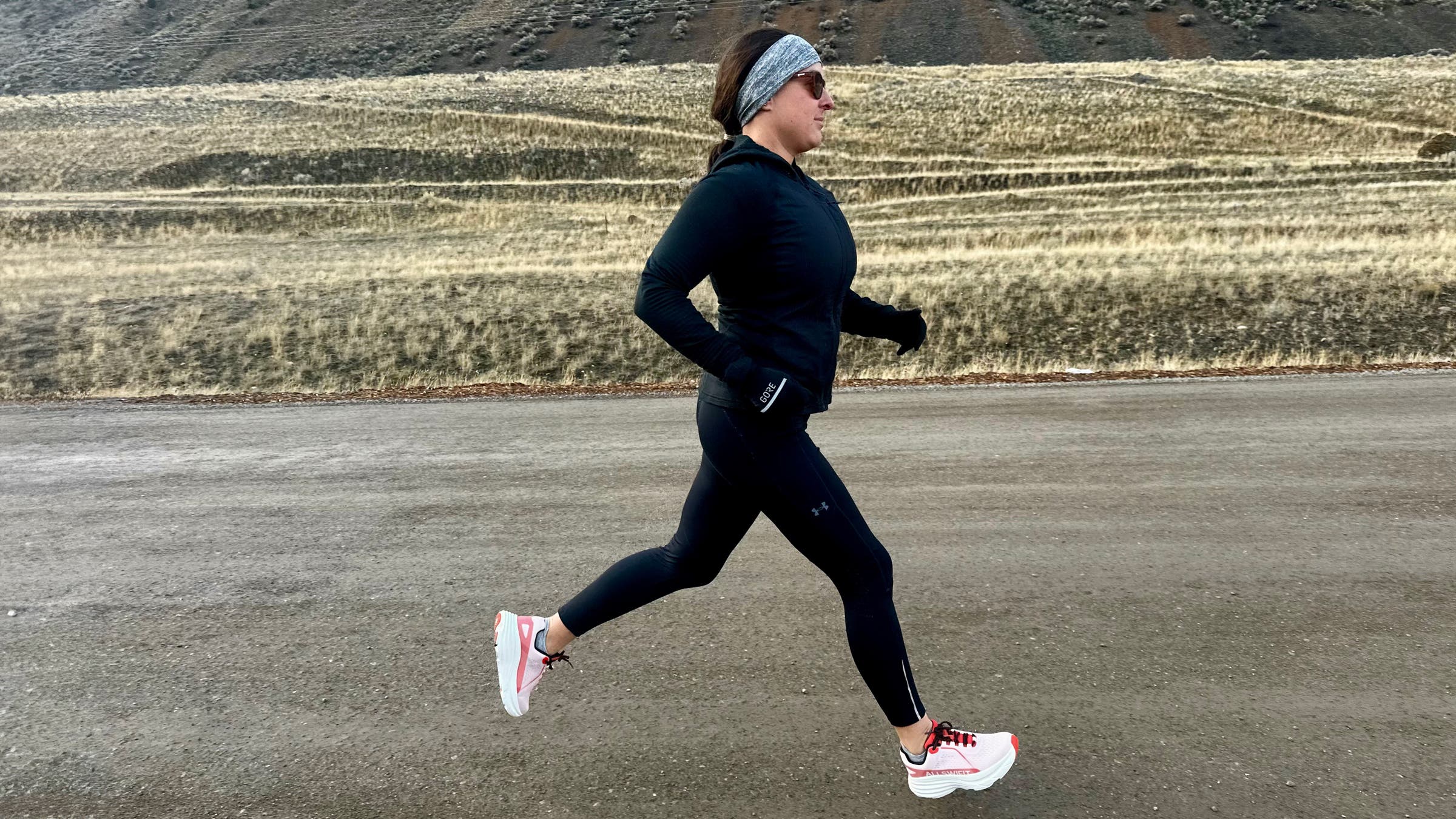
It was an unseasonably warm day, and I was running back and forth on a dirt road while my good-natured partner took dozens of photos at every possible angle. Usually I’d be hollering about photo timing to catch the upstride, but this morning, I kept stopping to exclaim, “These budget shoes are so comfortable!”
The Nortiv 8 shoes I wore retailed for just $60, less than half the price of most name-brand models. Initially unsure of what to expect, I was so impressed by their comfort and stability that I kept them on for an afternoon hike. Over the next two months and a dozen outings, my first impressions were confirmed: these budget running shoes are a very solid option at a very low price.
Like a suspiciously cheap sofa or a $20 bike helmet, shoes that deviate significantly from standard pricing raise eyebrows. Most road shoes use similar materials and construction techniques, resulting in a narrow cost window between $140 and $170. This makes running shoes hard to dupe and leaves me skeptical of anything under $110. Where are they saving money? Are cheap running shoes a recipe for injury?
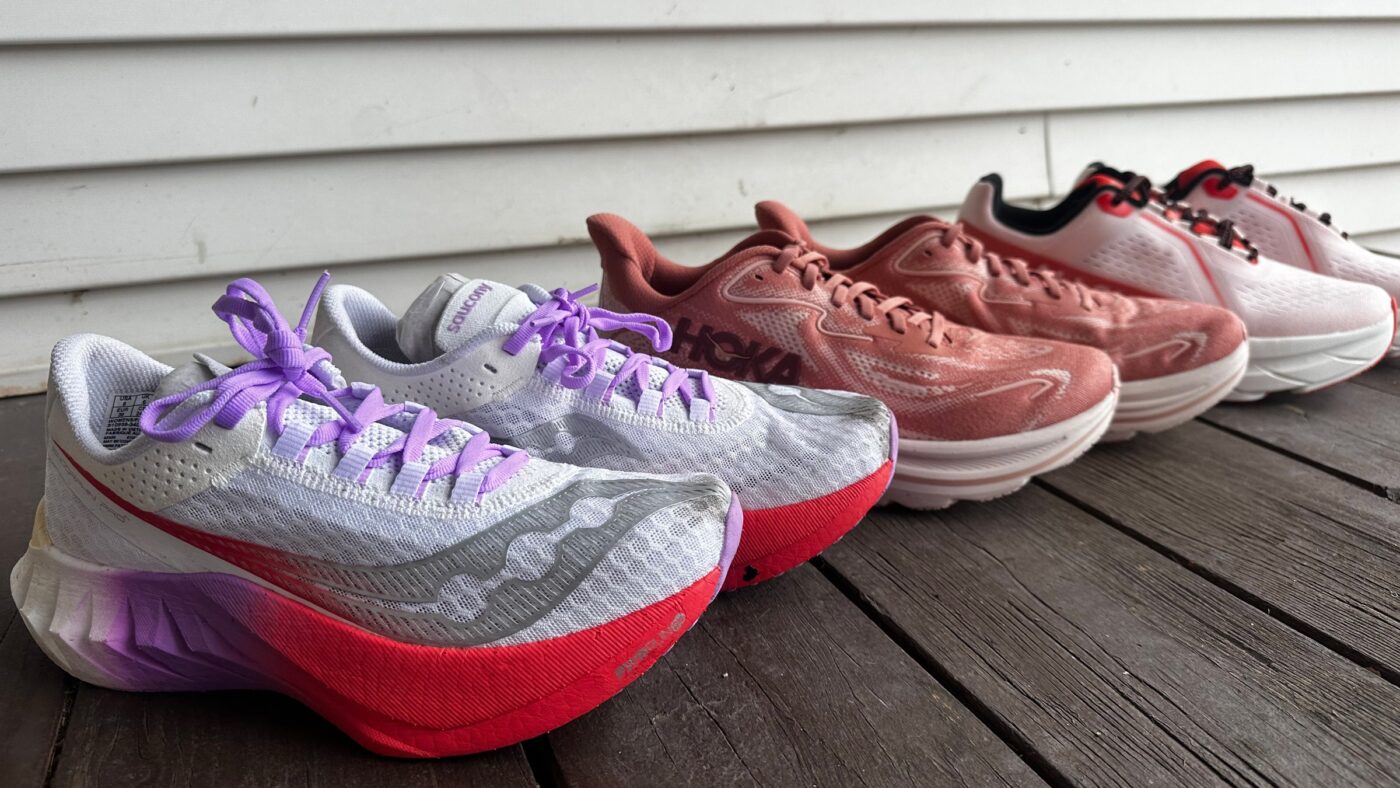
So when I saw the positive reviews on the $60 Nortiv 8 Allswifit ActiveAiry, a cushioned, neutral road shoe, my curiosity was piqued. For direct comparison, I tested them against the $155 Hoka Clifton 10 and the $240 Saucony Endorphin Speed Pro.
Style-wise, the Clifton and ActiveAiry are fairly similar. Both are max-cushion everyday trainers with an emphasis on stability, though the ActiveAiry has a slightly taller heel stack and 14mm drop compared to the Clifton’s 7.2mm. The Endorphin Speed Pro is also highly cushioned, but it’s a race-focused performance model equipped with a carbon-fiber plate and fancier midsole foam—far from an everyday trainer, but a valuable testing addition to understand the difference between shoes at different price ranges.
Price tags and tech details, however, only tell half the story. To see if cheap running shoes can actually hold their own against the brand-name giants, I put all three models through a rigorous two-month test.
How I Tested Budget, Mid, and Pricey Running Shoes
I tested each pair of road running shoes during easy runs and interval sessions to evaluate comfort, upper fit, breathability, stability, and energy return. For context, I have a neutral stride with slight over-pronation, making me sensitive to midsole instability, though I don’t require a stability shoe. My feet are also very forgiving, though I have a lower-volume heel and can struggle getting a tight lock through the back. During winter, I run anywhere from 20 to 60 minutes through town roads and gravel paths, and I try to spice up slower runs with intervals every few days to keep it interesting. I’m a very average runner, and I’m not currently training for anything.
Here’s what I focused on while shoe testing:
- Comfort: Do they fit well and feel secure through the upper? Any rubbing or hot spots? Is the midsole shock absorbent, or do I feel the ground in a bad way?
- Stability: Does the foot plant feel secure, or do my ankles feel roly-poly? Does the midsole collapse during push-off?
- Energy return: Is the run sluggish or peppy? Are the shoes springy underfoot?
To contextualize my testing, I spoke with industry experts Ada Wu, product director for Allswifit; Luca Ciccone, director of product engineering at Saucony; and Dr. Elizabeth Bass Daughtry, DPM. Finally, I spoke with my own father, Neil Slepian. He’s my shoe ringer—his 35-year footwear career spanned Nike, Reebok, Saucony, and New Balance, primarily in product development and manufacturing.
The Reviews
Budget Road Running Shoes: Nortiv 8 Allswifit ActiveAiry
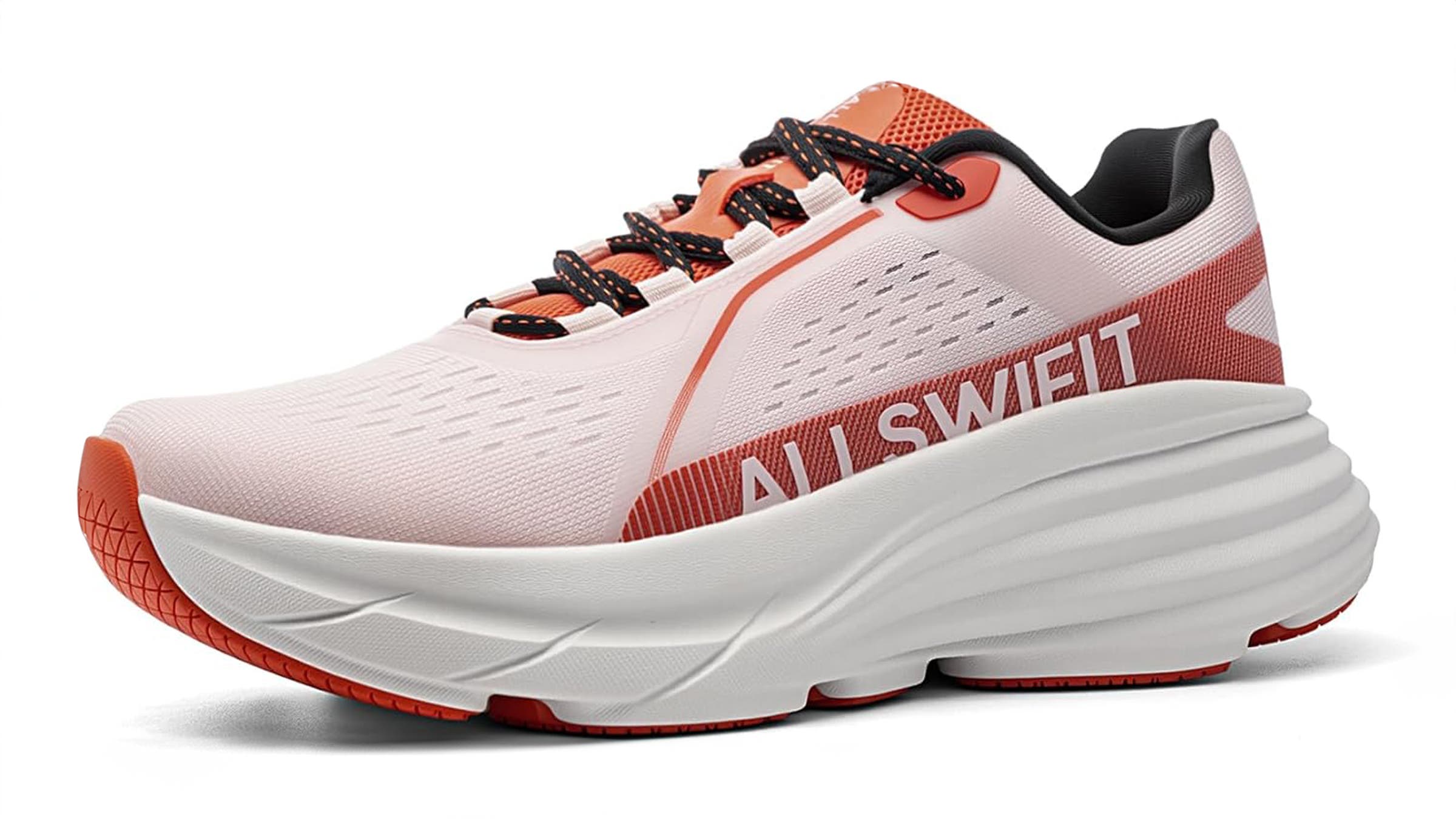
Weight: 8.47 ounces per shoe
Heel-toe drop: 14mm
Heel stack: 40mm
Best For: Casual runners, anyone getting into a fitness routine who wants to save money without sacrificing fit and function.
Pros:
+ Excellent cushion
+ Extremely stable throughout stride, despite tall heel stack
+ Accurate fit
+ Nicely energetic underfoot
Cons:
– The build is less precise through midfoot and heel counter
– Banging against ankle bone after extended wear
I was immediately impressed (and surprised) by these budget running shoes. Cushion and stability-wise, these feel similar to the Clifton 10. The excellent underfoot comfort felt the same as more expensive max-cushioned shoes, and the energy return was bouncy and fun. I felt light on my feet during both tempo runs and regular-paced outings, and the foot plant is incredibly stable.
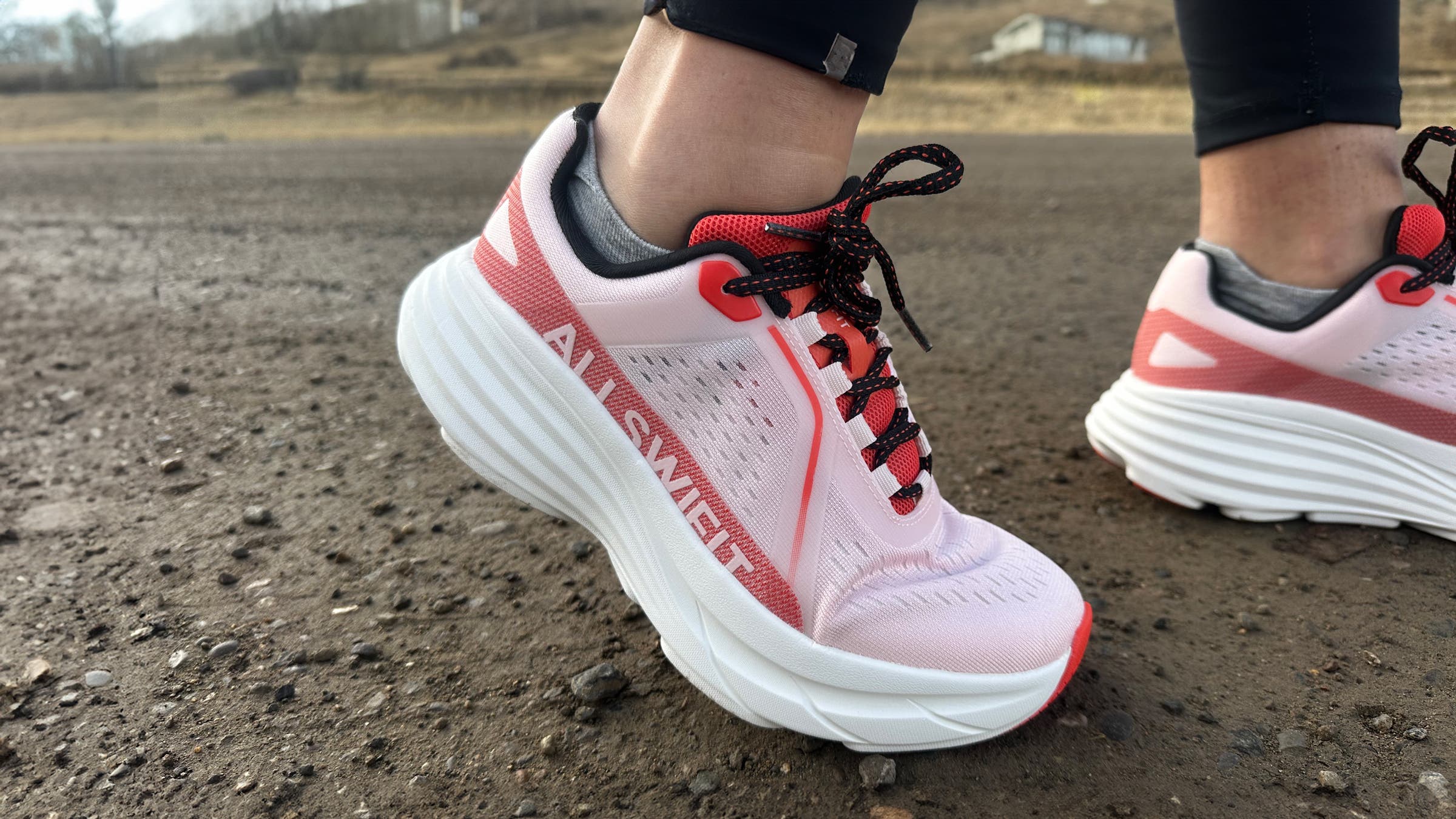
One of the most obvious tells for a cheap running shoe is a boxier build, and the Nortiv 8 shoes are no exception. Although my normal size fit well (with enough space in the toe box for comfort, sans sloppiness), the clunky-looking shoe lacked the more tailored, three-dimensional build of pricier shoes. In comparison, the Hokas and Saucony shoes feel more custom-molded to my feet than the less precise Nortiv 8. The upper material is also slightly stiffer than the Hoka shoes, and less flexible than the mesh on the Sauconys.
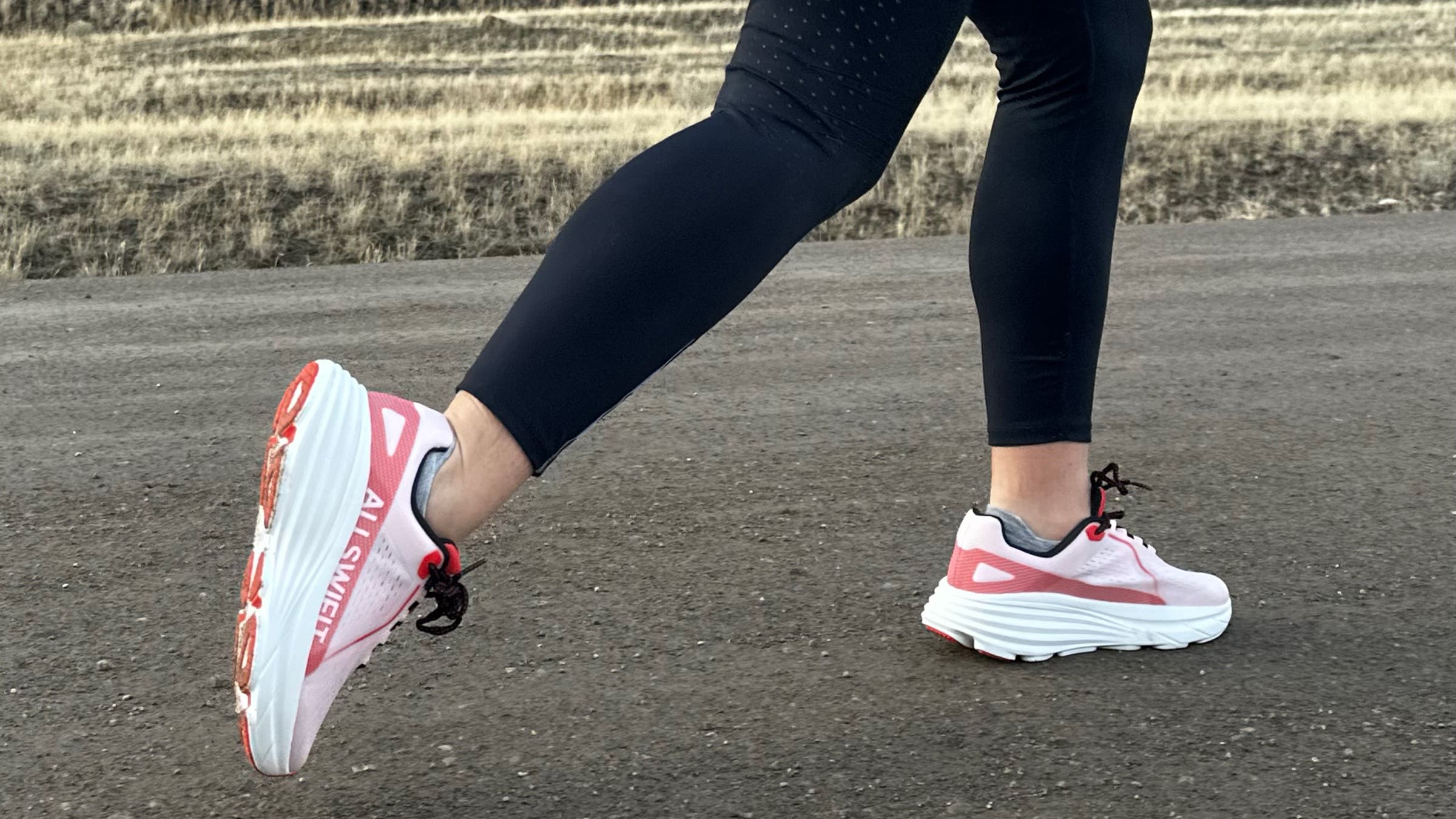
I’ve only been testing these for two months, but they’ve held up well over roughly 50 miles I’ve put on them. I haven’t noticed any issues with EVA foam compression, and the tread patterning has the same nearly-new look as the Hoka and Saucony shoes. The only real issue I encountered was the heel collar, which would occasionally bang into my ankle bone. Overall, I was incredibly impressed with these shoes and would consider them a perfectly valid option for a highly cushioned, stability-oriented shoe.
Mid-Range Running Shoes: Hoka Clifton 10
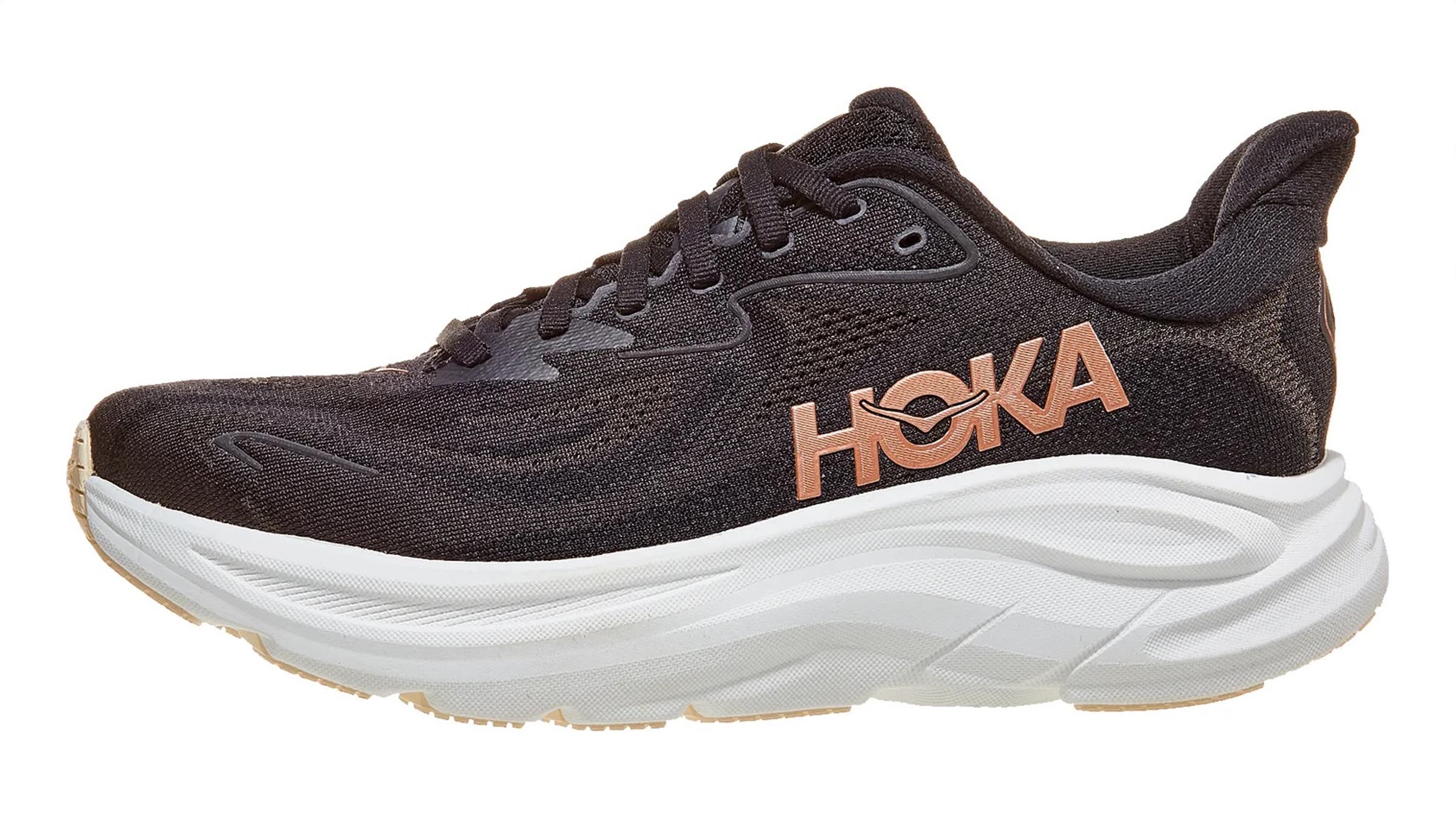
Weight: 8.8 ounces per shoe
Heel-toe drop: 7.2mm
Heel stack: 37.6mm
Best For: Runners looking for a more precise fit and tailored design
Pros:
+ Breathable, stretchy jacquard knit upper
+ Molded fit through the arch
+ Very stable underfoot
Cons:
– Heel cup and back of the shoe can feel a little sloppy for low-volume feet
– A little sluggish at higher speeds
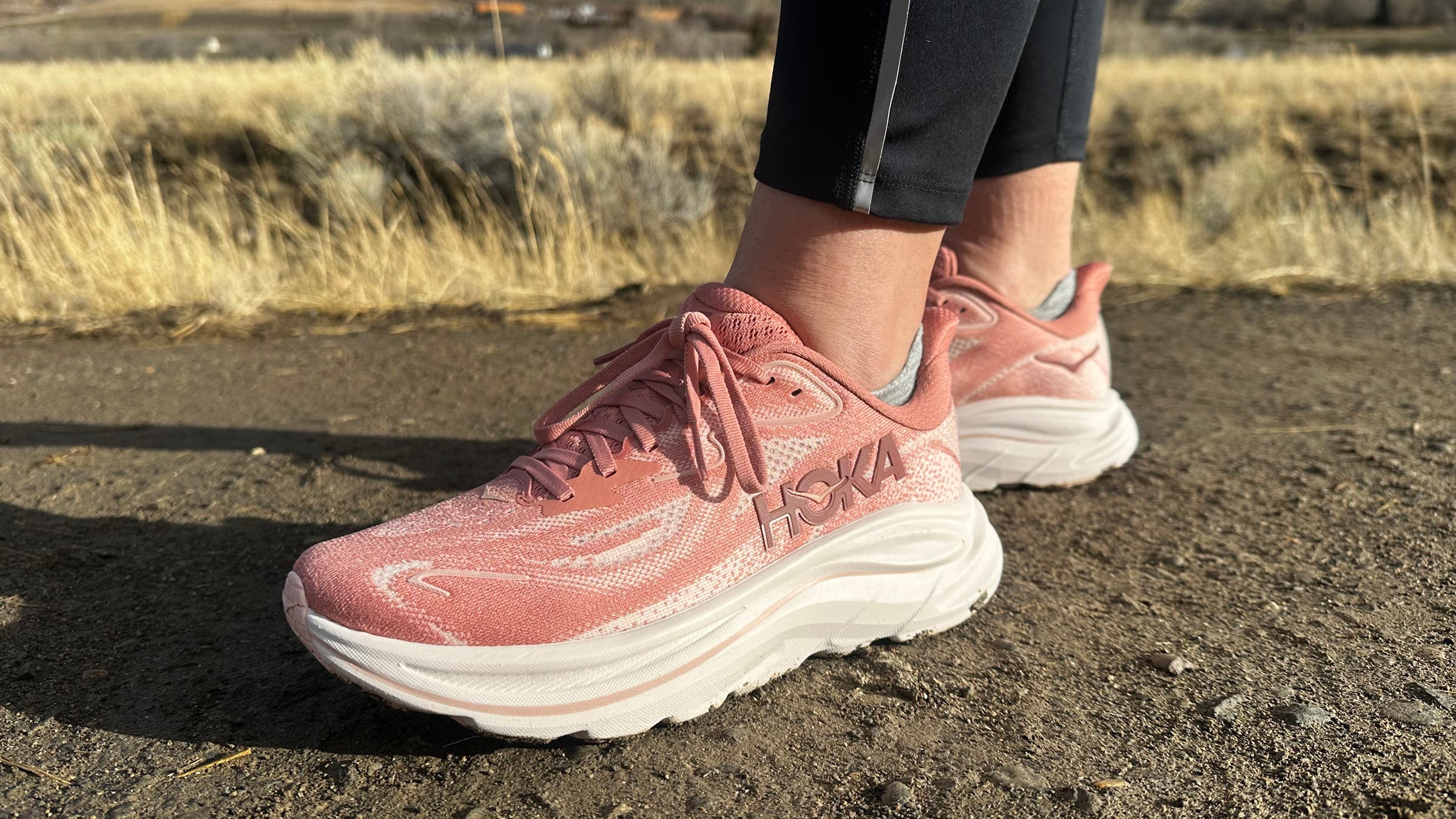
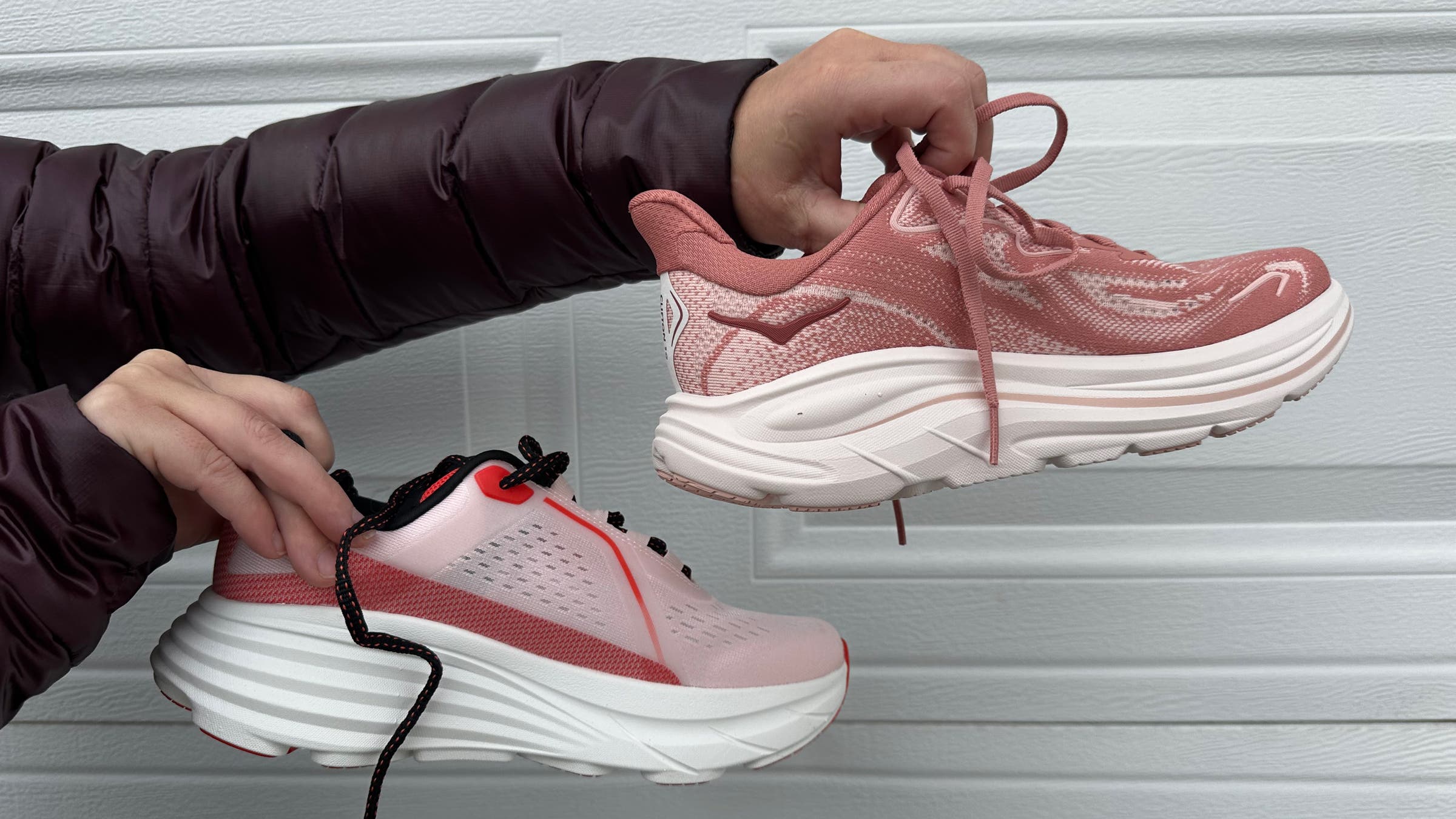
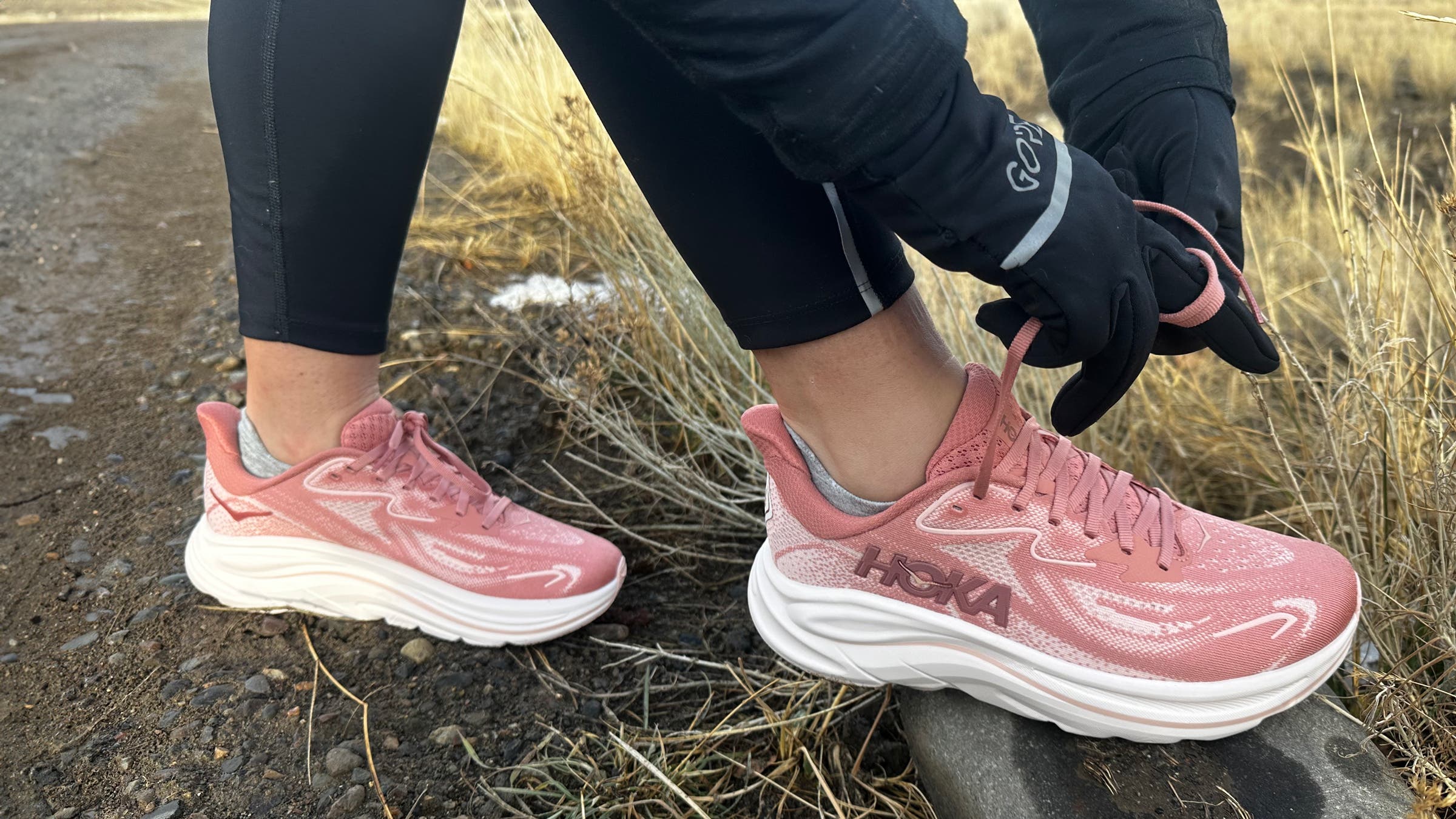
The Clifton is one of Hoka’s most popular daily training shoes, built for comfort over long distances with a nicely padded upper and highly cushioned midsole. I could immediately feel more precision through the upper and better spacing for my ankle bones compared to the Nortiv 8. The Cliftons feature a molded instep and a stitch-and-turn heel tab, rather than the die-cut heel on the Nortiv 8, which lends itself to a more streamlined and well-fitting build.
The stability is excellent, with a wide platform and secure fit through the upper that helps offset some inherent instability in such a tall shoe. The underfoot cushioning is ample for long, moderately paced runs, but I’d argue the Nortiv 8 shoe has more rebound. The 7.2-millimeter drop in the Clifton (compared with 14 millimeters in the ActiveAiry) might be part of why the Clifton doesn’t feel as propulsive. Heel-toe drop is largely personal preference though, and some runners might prefer the more neutral-feeling Clifton.
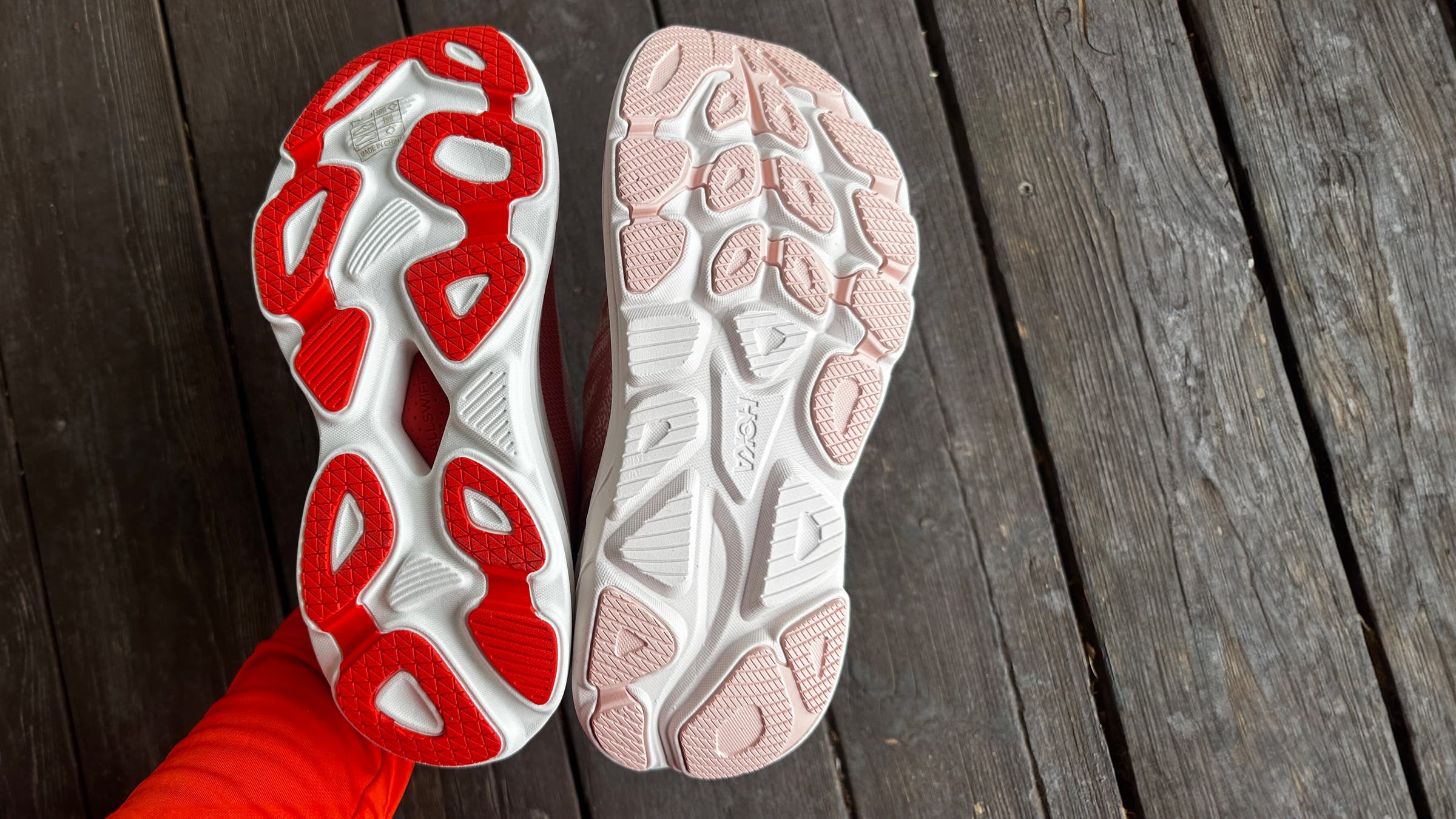
The main issue I had with the Cliftons was an insecure fit through the heel. It feels wide and low through the back, and I had to really tighten the offset laces to get a better fit. This could be a symptom of my low-volume feet, so take it with a grain of salt.
Expensive Running Shoes: Saucony Endorphin Pro 4
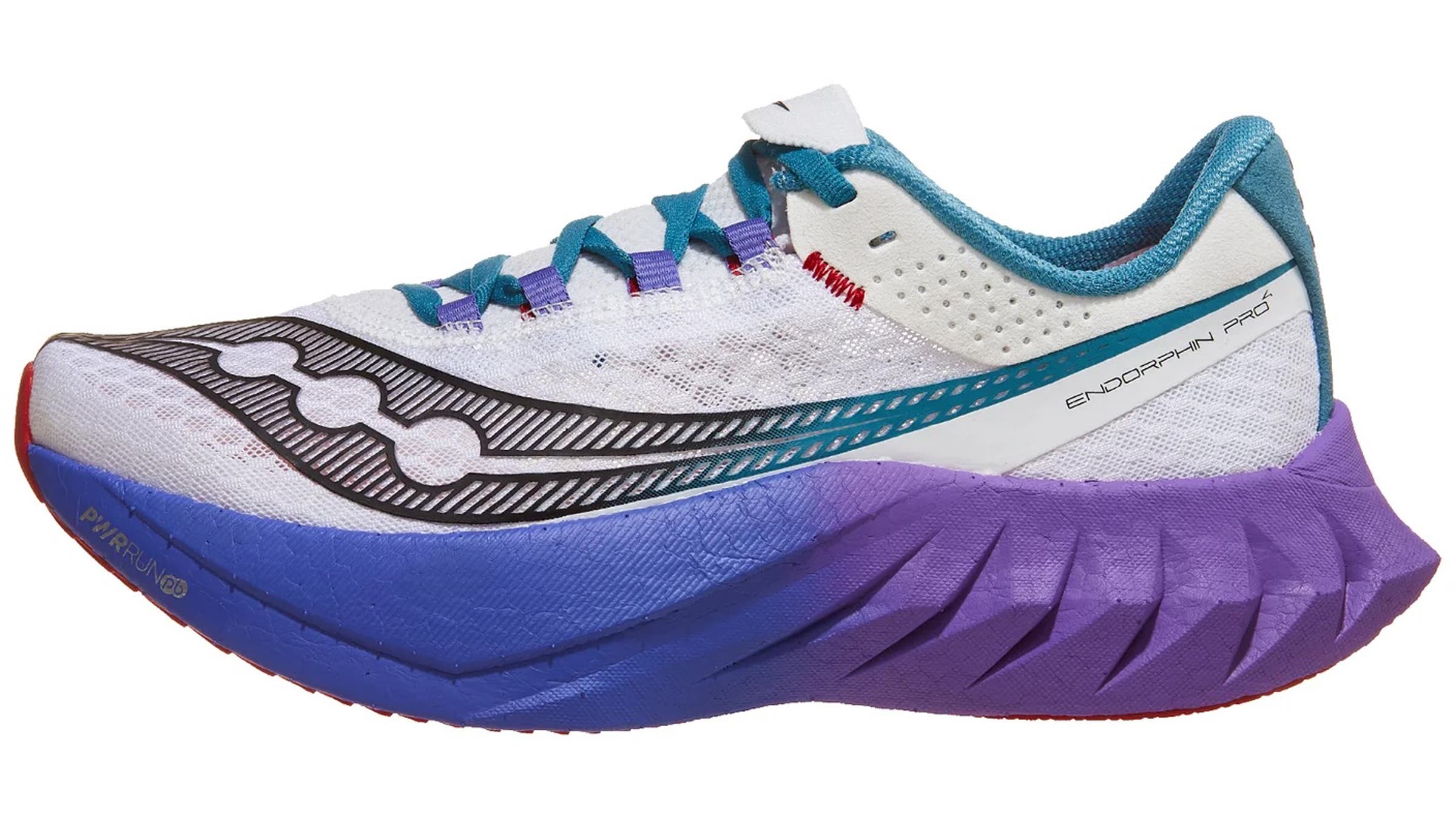
Weight: 6.5 ounces per shoe
Heel-toe drop: 8mm
Heel stack: 39.5mm
Best For: Performance-oriented road runners seeking the best combination of stiffness and rebound
Pros:
+ Specialized midsole foam and carbon plate enhance rebound and efficiency
+ Shoes have a custom-feeling fit and ultralight build
Cons:
– Less structure through the upper can feel insecure
– Not as stable underfoot during moderate runs
At $240, these are the most expensive road-running shoes I own—and it shows. The Saucony Endorphin Pro 4 shoes feel lighter, springier, and more flexible than the Hoka or Nortiv 8. They’re built with Saucony’s signature narrower heel cup and a flared toe box, and the mesh is so light they have almost a slipper-like feel. This design does reduce some upper stability, and I felt like I lost midfoot support with the minimal build.
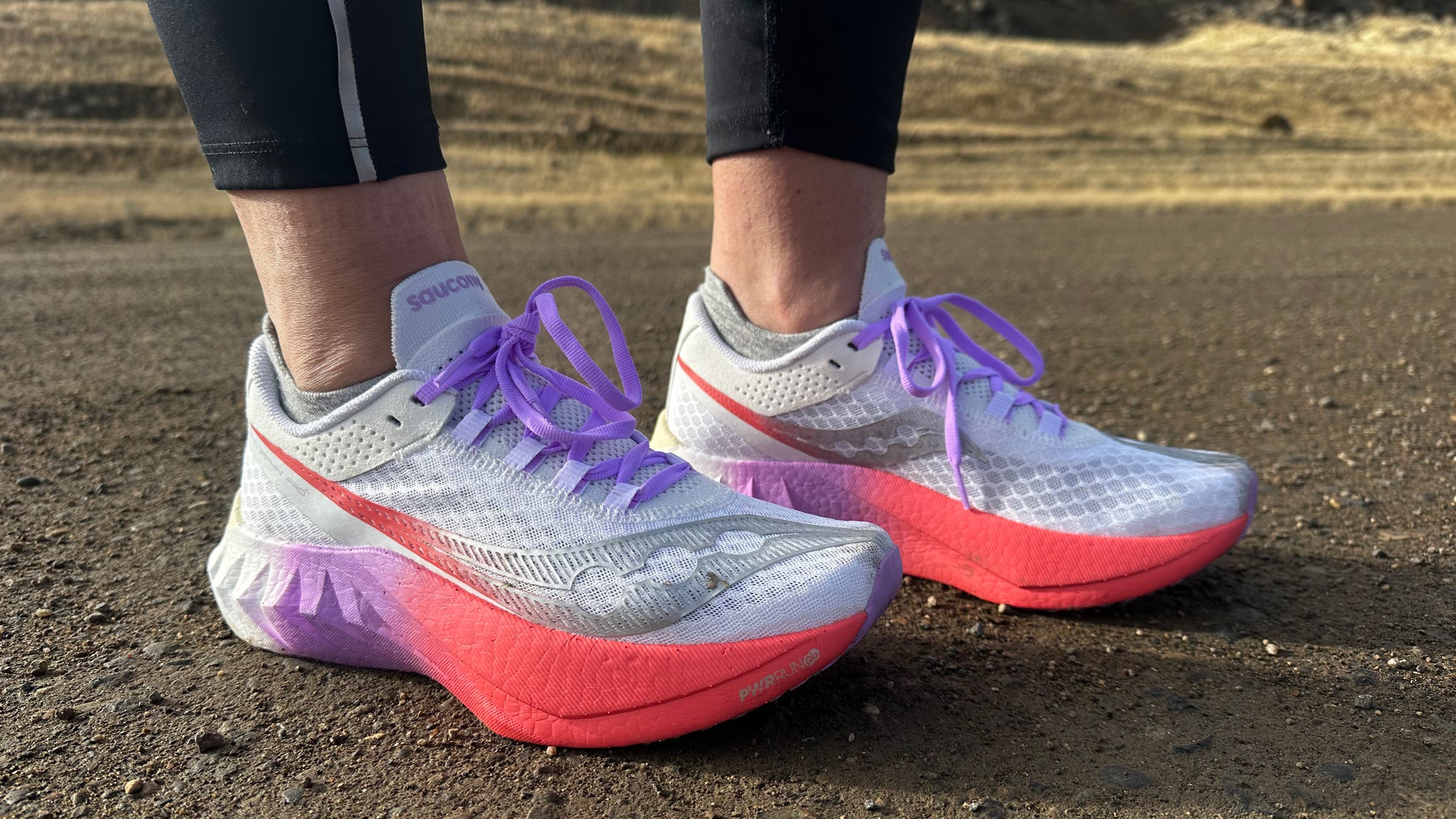
Like I said above, the Endorphin Speed 4 is not a casual daily jogging shoe. Instead, it’s a lightweight road-racing model complete with a carbon plate and two types of Saucony’s proprietary supercritical (gas-infused) foam in the midsole. Most running shoes over $200 are equipped with a carbon plate tuned for fast runners, making this style best for racing and speed training. Unsurprisingly, the shoes excel in stride efficiency and rebound, and regardless of how little I felt like running that day, my stride always felt more energetic than I expected.
I was worried the mesh would snag—you couldn’t have an upper like this on a trail running shoe—but there were no durability issues. The biggest detractor is the lack of stability. This isn’t a shoe for casual, slow runs, and you’ll feel the narrower build and leaner midfoot pretty quickly. If you tend to over-pronate or supinate, you’ll want a shoe with a wider base and more upper structure. And it goes without saying, most people do not need a $200-plus carbon-plated shoe, and the cost puts it into its own category.

The 3 Biggest Factors in Running Shoe Cost
Shoe costing is a complex process with many variables, including component count, construction methods, and raw materials. Is it possible for Nortiv 8 to make a comfortable, decent-quality shoe for $50-70? The short answer is yes. The long answer involves several aspects of shoe manufacturing and sales.
Construction, Complexity, and Materials
Material-wise, the Hoka Clifton 10’s components are more expensive than the Nortiv 8. The Clifton features a custom-knit upper utilizing multiple thread colors and custom patterning, requiring a unique knitting program for various sizes. Conversely, the Nortiv 8 shoes use less expensive, non-custom perforated material. While breathable, they lack the same fit precision as the foot-hugging Hoka upper.
Regarding construction, the Nortiv 8 shoe is less complex, with a straight-cut instep compared to the foot-molded shape of Hoka or Saucony. The difference is clear: more expensive shoes conform to the foot with minimal movement. The simpler build isn’t a dealbreaker for the Nortiv 8, but the fit is less precise through the midfoot and heel. The midsole foam is notable here as well—while I felt similar rebound in both the Hoka and Nortiv 8 shoes, higher-end shoes often use injection-molded EVA, which has better rebound and density variation than molded EVA. In a super shoe like the Endorphin Pro, the carbon fiber plate sandwiched between midsole foam layers also adds significant cost to the build.
Aesthetics
Fewer overlays and cosmetic additions enable Nortiv 8 to reduce costs without compromising performance, Neil explained. For example, the two-tone welded Hoka logo is more expensive than the Nortiv 8’s simpler overlays, and the midsole color gradients on premium models like the Endorphin Pro 4 are costly with no impact on fit or feel.
Business Model
Nortiv 8’s direct-to-consumer model—along with a lower marketing budget and modular designs (using the same components for multiple models)—is the primary reason they can sell shoes for a fraction of the cost of name brands.

So, Is a Cheap Running Shoe Right for You?
I initially expected to hobble through the budget running shoe testing, but that wasn’t the case. Board-certified foot surgeon Dr. Daughtry found the Nortiv 8 shoes comparable to Hoka in terms of stability and comfort.
“Budget shoes don’t have to be poor quality,” Dr. Daughtry said, recommending shoppers look for the APMA Seal of Approval as a quality indication.
What I learned about the Nortiv 8 shoes backed up my initial impression: they’re a great budget running shoe option, because their low cost doesn’t reflect a low-quality build or materials. Instead, the pleasantly low price tag comes primarily from a direct sales model, minimal marketing, and simplified aesthetics.
Overall, it’s heartening to see a viable shoe below the normal price range, since athletic apparel and footwear can be a costly barrier to entry. But remember: footwear is an individual choice, and the best running shoe for you depends on foot shape, training goals, and gait. Regardless of construction or materials, what works for one person might not work for another. The most important factor is how well a shoe fits your foot and stride, rather than the brand name.
Source link
