
No products in the cart.
Fitness Tips
Paradise Lost: Drugs Turn Up in Remote Bahamas Sharks

29
Mar
Mar
While headlines about people being attacked by sharks are fairly common, facts that prove the majestic underwater animals are under threat from us don’t get as much attention. A new study reveals a disturbing way that sharks and their once gorgeous habitats have been harmed by humans.
Scientists Shocked by What They Found in Bahamas Reef Sharks
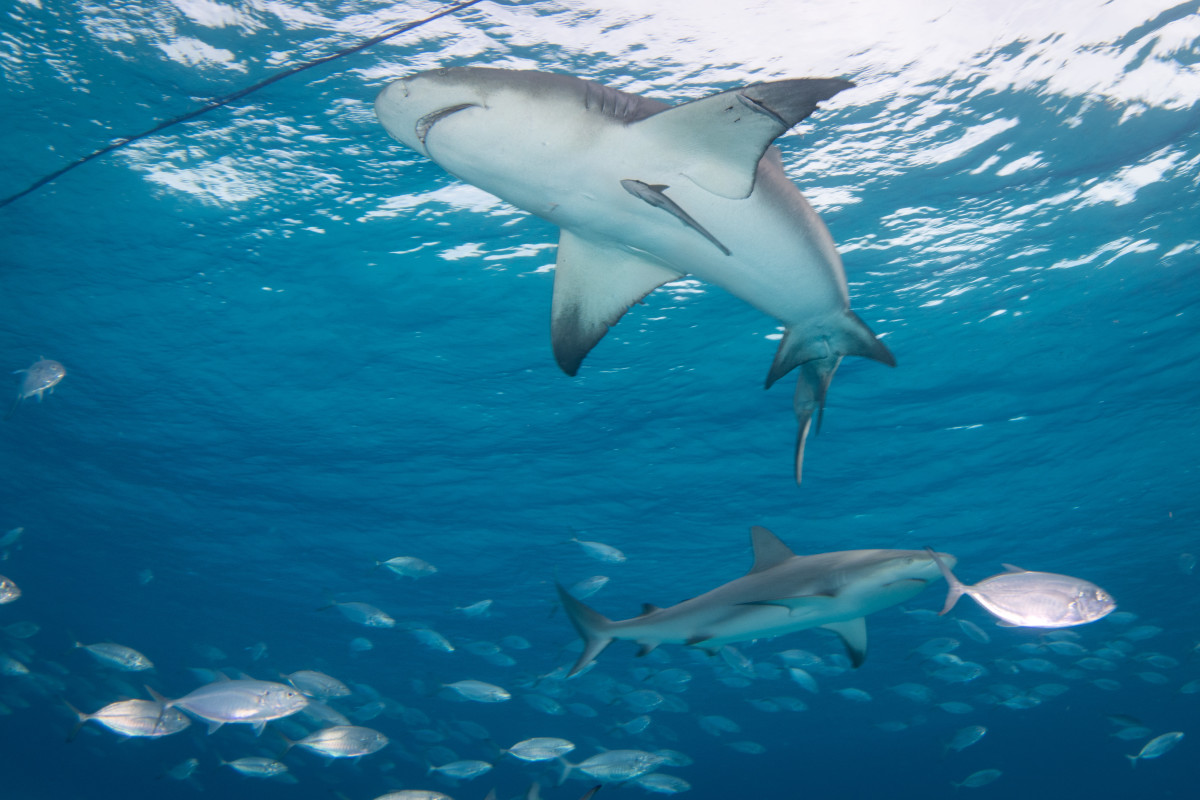
Photo: Brandy Mueller via Getty Images
For centuries, graceful sharks were able to glide through crystal-clear waters in the Bahamas as they were surrounded by other sea life, including the coral reef. As their habitat was untouched by the modern world, the majestic animals would swim through an environment that could have been described as paradise without hyperbole. Sadly, however, a hidden threat from humans has invaded and polluted the sharks’ home.
As the New York Post reported, a new study has found that a shockingly large percentage of sharks in the Bahamas have tested positive for an array of different drugs. Researchers, led by the biologist Natascha Wosnick from Brazil’s Federal University of Paraná, tested blood samples from 85 sharks in the water surrounding Eleuthera Island in the Bahamas. They found that 28 of them, which is nearly one-third, had detectable levels of various substances in their bloodstreams.
The most commonly found substance in the sharks was caffeine. That is especially notable because caffeine had previously never been documented in any shark species worldwide. Additionally, acetaminophen and diclofenac were also detected.
Easily the most eye-catching element of the study is the fact that cocaine was detected in two sharks. While speaking to Science News about the study’s findings, Wosnick hypothesized they could have consumed cocaine by biting a packet of the substance in the ocean. “They bite things to investigate and end up exposed.” Notably, the study also found that some of the sharks had multiple substances in their blood.
Why This Matters Beyond the Shock Value
One of the most troubling elements of the results of this study is where the researchers conducted it. Often marketed as paradise on Earth for good reason, the oceans in the Bahamas have long been perceived as one of the most gorgeous locales on the planet. On top of that, Eleuthera Island, the land closest to where the samples were taken, is one of the most remote areas of the country. Far from major cities, it certainly seems like its waters should be largely pollution-free.
The findings of this study show that invisible pollution from humans is affecting every corner of the planet. It also proves that animal life is affected by human contamination in ways that are even surprising to scientists. If that isn’t sobering evidence of how every piece of paradise on Earth is being lost, nothing is.
Source link
